Mitsubishi PHEV Numbers

Hyper-real CG for a world made of numbers

overview.

The Studio were pleased to have worked with RSA director Brett Foraker on his commercial for the Mitsubishi Outlander PHEV, “The numbers never looked this good”, for ad agency Golley Slater Cardiff.

The 2016 Mitsubishi Outlander PHEV campaign was inspired by the creative approach for the original launch in 2014. The Mitsubishi Outlander PHEV was the world’s first 4WD Plug-in Hybrid SUV, producing a remarkable 148mpg and becoming the UK’s number-one selling hybrid vehicle.

Not only does the 2016 Mitsubishi Outlander PHEV have even more impressive numbers at its heart, it also underwent a complete redesign with striking exterior styling and a premium interior finish.
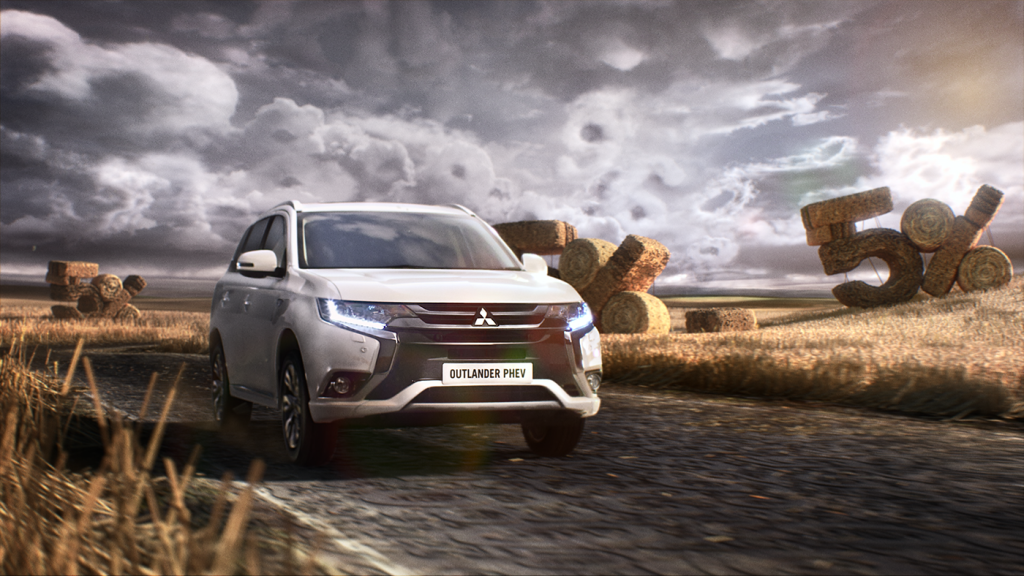
concept & styleframes.

Directed by ex-Channel 4 creative director Brett Foraker, the film turns numeracy into artistry. Each scene features a palette of numbers subtly woven into the landscape, ensuring that every repeat viewing reveals a previously unspotted detail. Like the vehicle itself, the campaign is a mix of hard numbers and wonderfully soft touches.

When the Studio@Smoke&Mirrors were first approached and shown the initial storyboards, the team were immediately excited about the possibilities and explored multiple post routes to embed numbers organically within every environment.

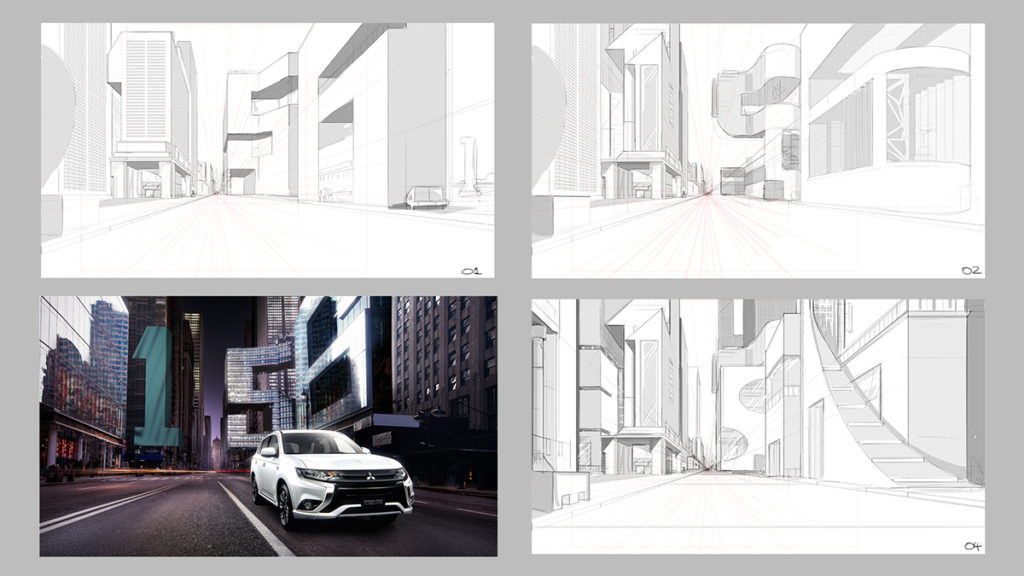
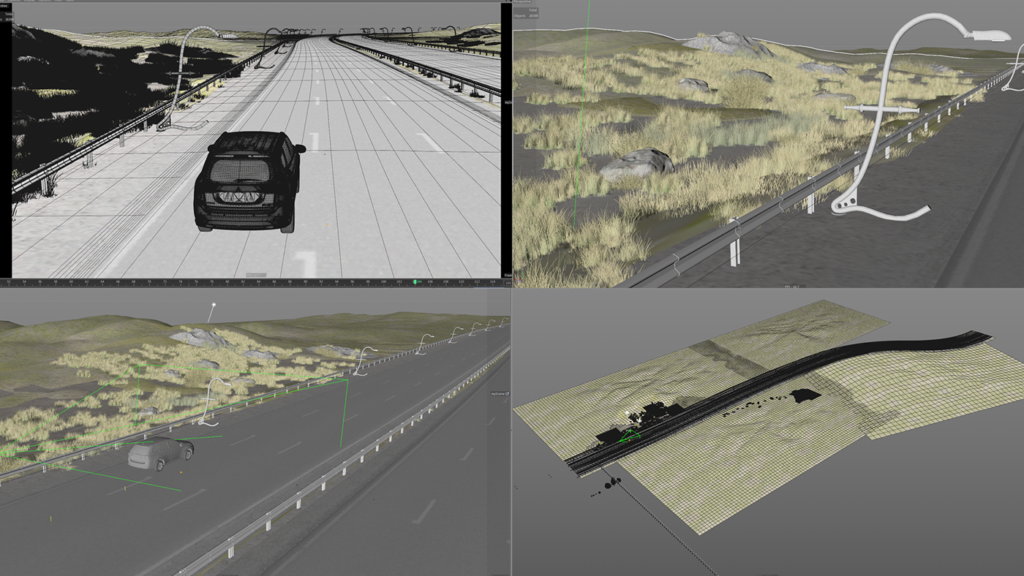
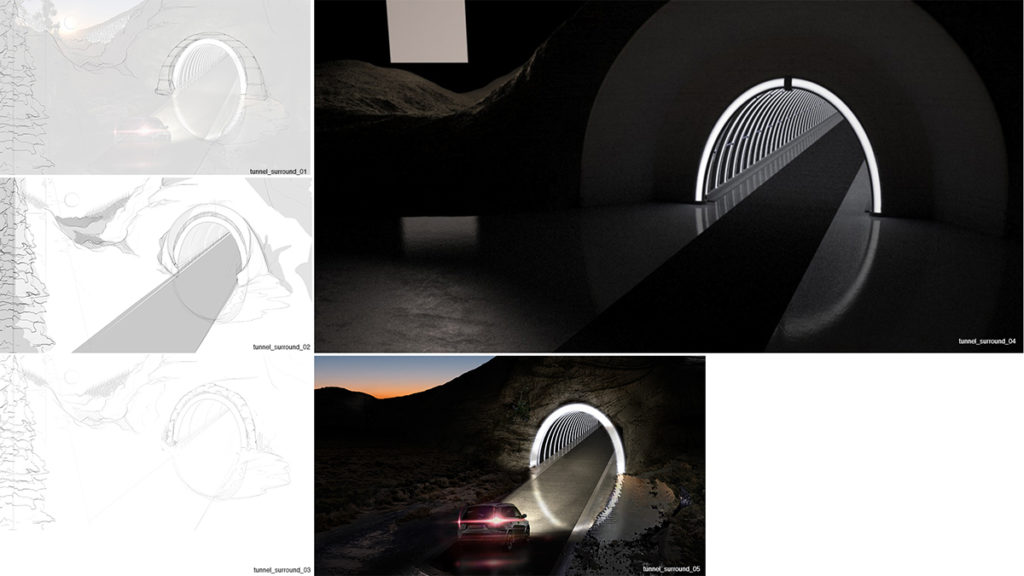
After a series of R&D tests and close pre-production with Foraker and the agency, a final visual route was agreed. Architectural concept sketches and high-resolution style frames were developed prior to the shoot alongside a full CG pre-visualisation of the car, camera rigs, and studio environment.

shooting & on-set rigs.

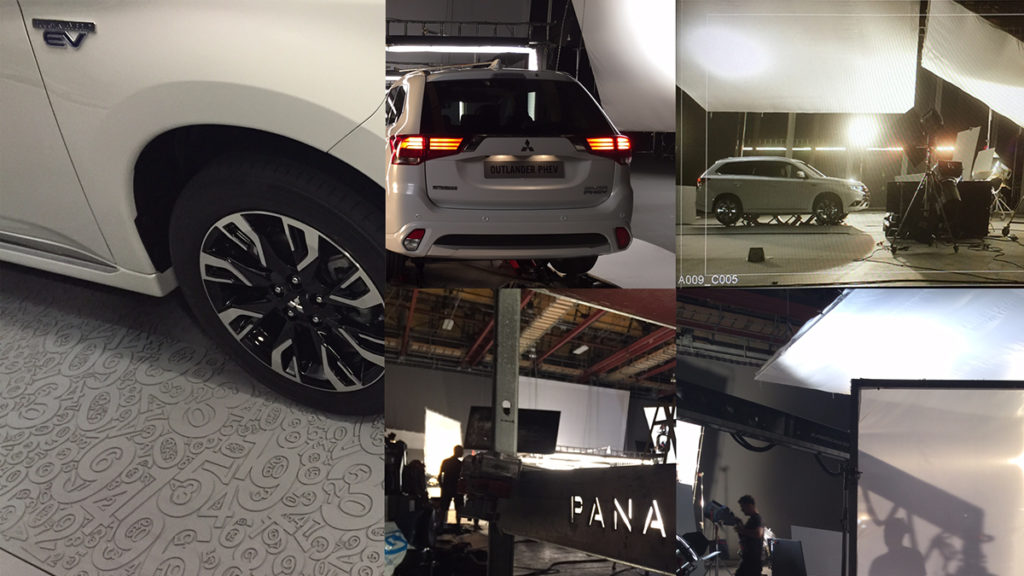
On-set shoot supervision was provided by the Studio using a combination of 2D and 3D artists alongside the Studio’s creative director. Reference and tracking data were collected on set and piped straight back to the studio so artists could begin scene assembly immediately.

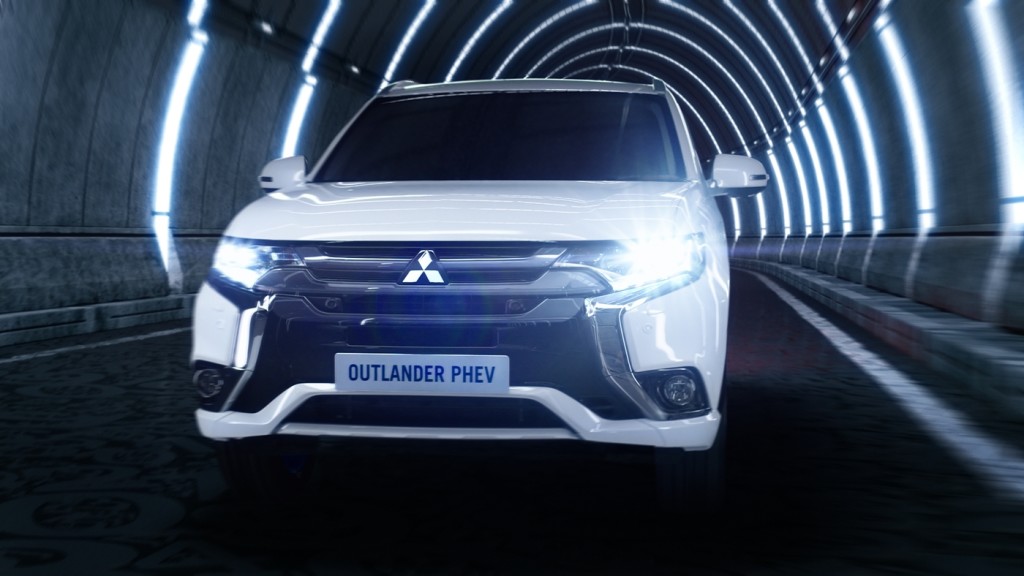
Bespoke laser-cut number tarmac was fabricated for the studio floor using exact vector geometry supplied by the CG team. Proxy tree trunks were built out of plywood on a huge overhead rig to cast natural moving light across the bodywork, alongside custom lighting rigs for the tunnel sequence, providing indispensable real-world reflections and interactive light reference for the CG team to extend in post.

Because of the tight delivery schedule, on-set editing allowed the agency and director to lock potential takes on the day so the 3D department could start prepping shots almost immediately.

post production & numeric detailing.

Post production had to run like clockwork, as practically every shot required 3D camera tracking, rigid object match-moving of the car, rotoscoping, rig clean-up, and beauty work.

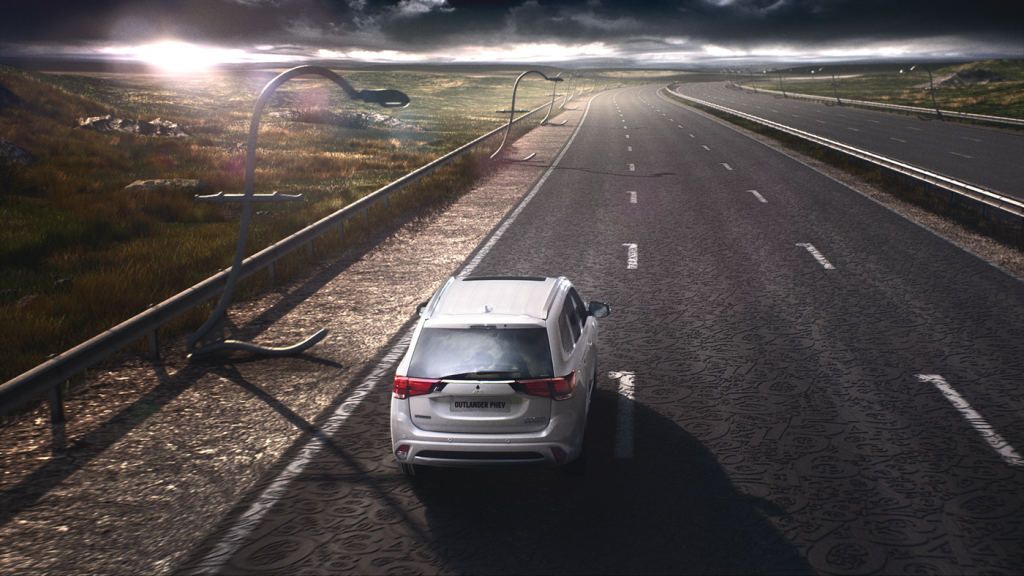
Creatively, an immense amount of detail went into every element: from how the cumulus clouds should form subtle digits in the sky, to the tiny 3D numbers grown into the ears of wheat and tall grass, right down to whether the road stones should read as 8s or 1s. If you freeze-frame any shot and explore it, you discover a whole new layer of hidden numbers crafted by the team.

Studio Creative Director Dan Andrew worked closely with Brett Foraker and the agency at every stage to make sure that level of numeric detail felt cohesive across the entire film.

previz & 3d direction.

The core challenge for the CG department was to build a world made entirely of numbers that still felt grounded and cinematic, where the viewer first takes in a believable landscape and then spots the numerical shapes woven inside it.

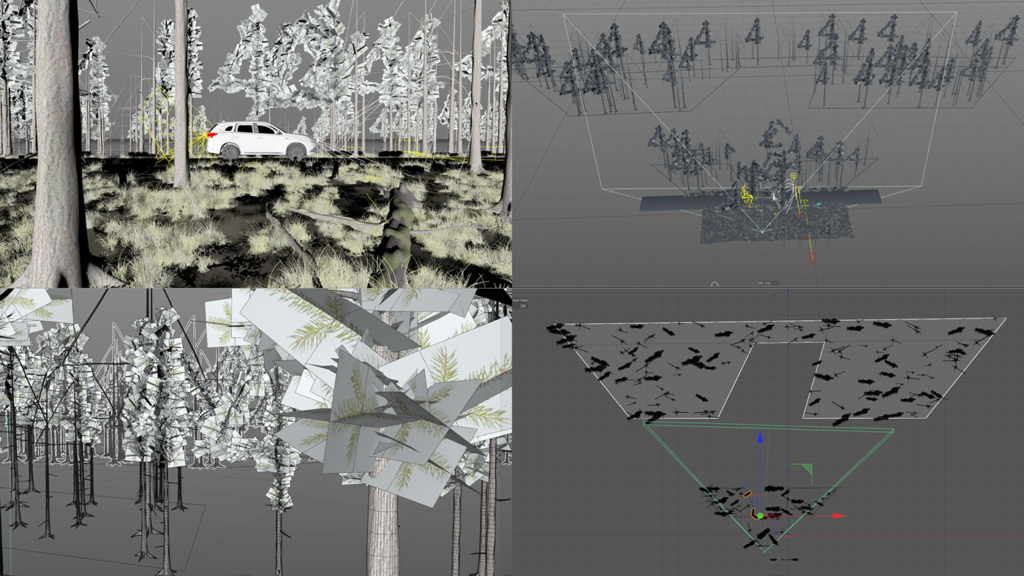
I personally created the full 3D previz prior to the shoot, working out the exact choreography of the motion-control camera rig and its physical studio constraints. Alongside managing the 3D team across the project, I also directly built and lit two of the hero environments (Shot 1 and Shot 4).

cinema 4d & v-ray hair.

We extensively used Cinema 4D and V-Ray, leaning heavily on its hair module to generate the wind-swept grass fields, number-shaped wheat, and pine forest scatter systems.

That pipeline proved to be the ideal choice for the schedule: with full Global Illumination and completely flicker-free rendering, complex exterior frames were rendering in roughly 45–55 minutes per frame, compared to well over two hours in the standard engine.

lighting from dawn to night.

A major creative goal across the edit was to progress the car’s journey continuously from early morning mist through golden hour, dusk, and finally deep into the night.

While the car plates were lit on stage as sympathetically as possible guided by our pre-shoot style frames, transitioning across times of day required extensive rotoscoping of individual car panels in Nuke to re-grade stage lighting, strip out studio rig reflections, and bed in bespoke CG environment reflections, especially as the car sweeps into the glowing “0” tunnel at dusk.

compositing & matte painting.

The Nuke and matte painting team, led by senior VFX artist Guillaume Weiss and CD Dan Andrew, composited nine full-CG environment shots in conjunction with Smoke & Mirrors’ Flame department. Shared timelines across Flame and Nuke Studio allowed dailies to be reviewed seamlessly with the director and agency throughout production.

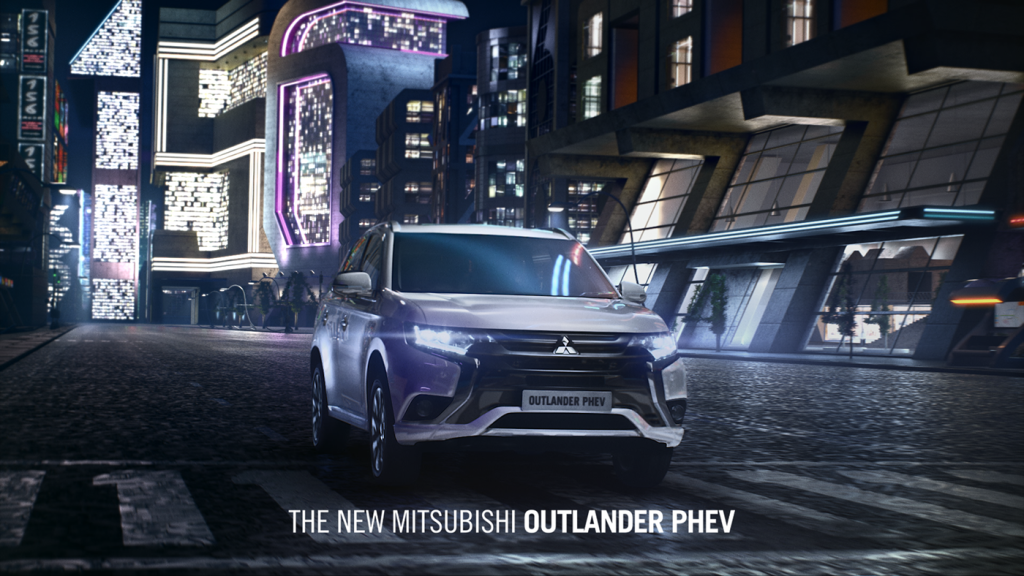
Extensive sky matte paintings were crafted for the evolving number clouds from morning through night by The Studio’s matte painting team led by Charlie Lougheed and Christian Tailor, culminating in the final night-time reveal of the glowing “156” city skyline.

credits.

Agency: Golley Slater Cardiff (Producer: Amanda Lowit; Creative Directors: Paul Williams, David Abbott)
Production Company: RSA Films (Director: Brett Foraker; Producer: Ben Porter)
VFX & Post: The Studio @ Smoke & Mirrors (Creative Director: Dan Andrew; Producers: Lydia Evitt, Krystle Timm)
3D Operations: Nicola Gastaldi, Nicola Destefanis, Antonio Filippin
2D & Matte Painting: Elliott Bellwood, Guillaume Weiss, Rory Whittle, Charlie Lougheed, Christian Tailor
Colourist: Mark Horrobin  |  Audio & Sound Design: SNK Studios